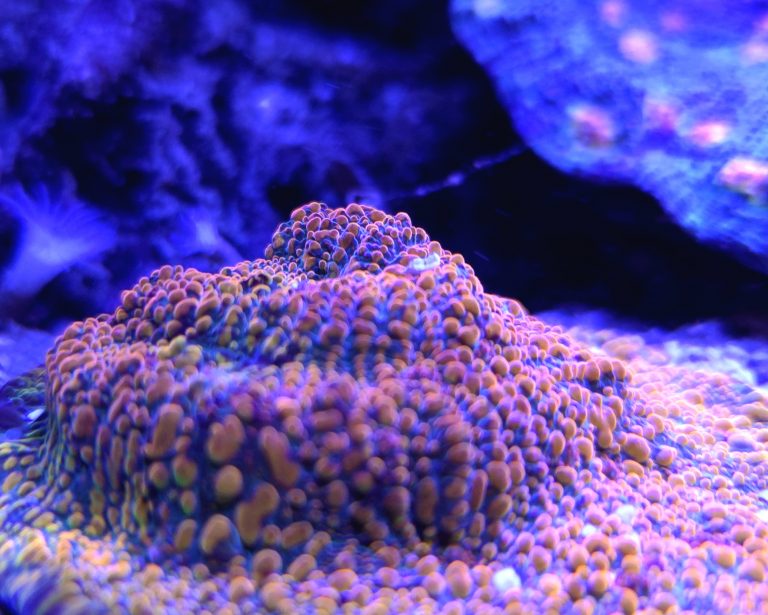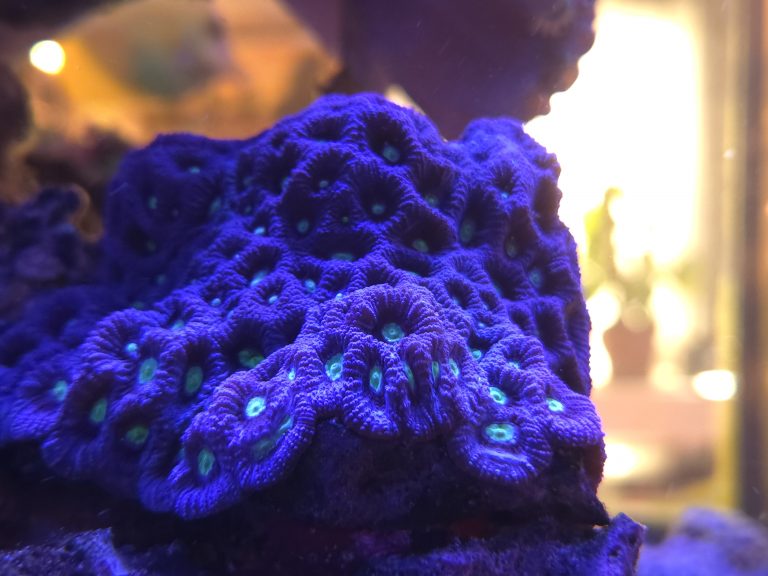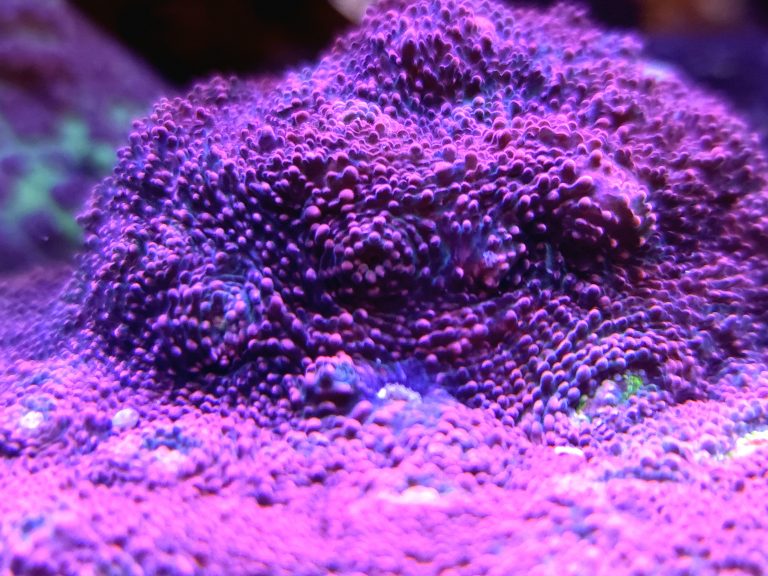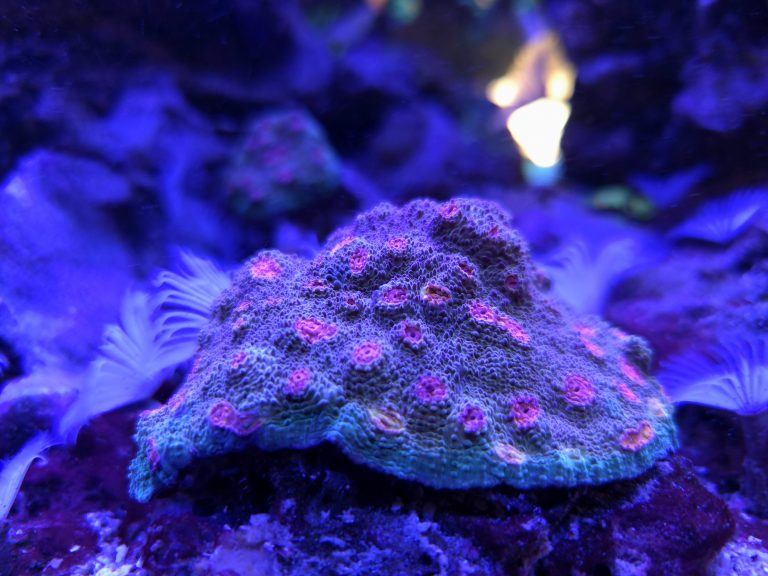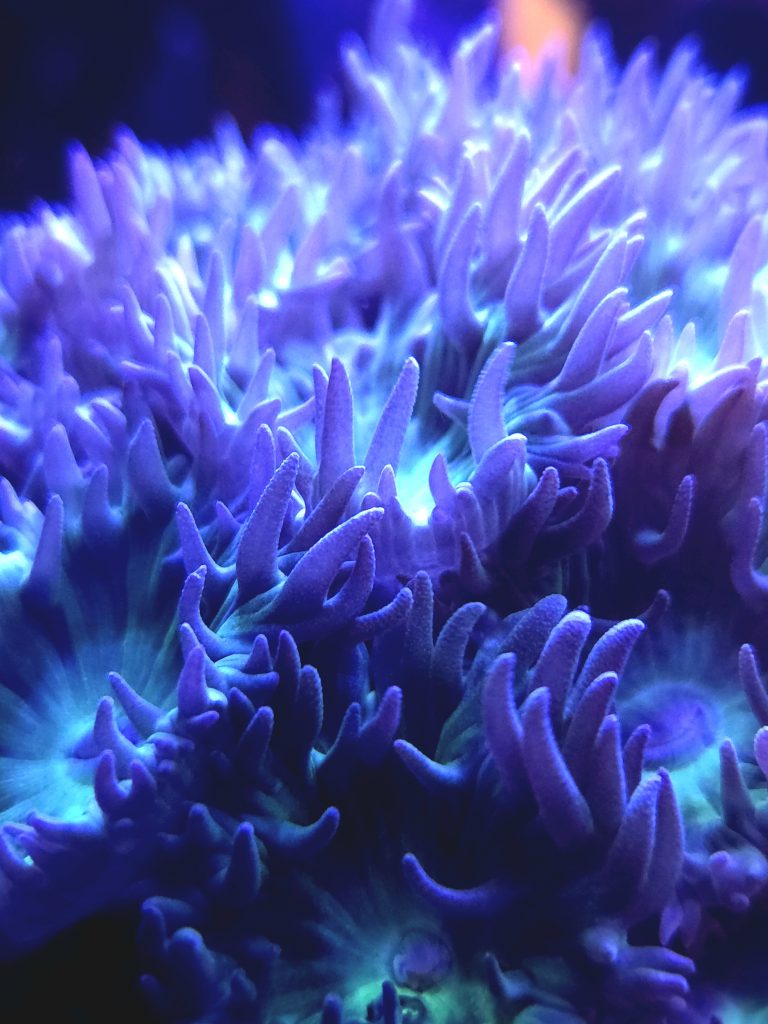
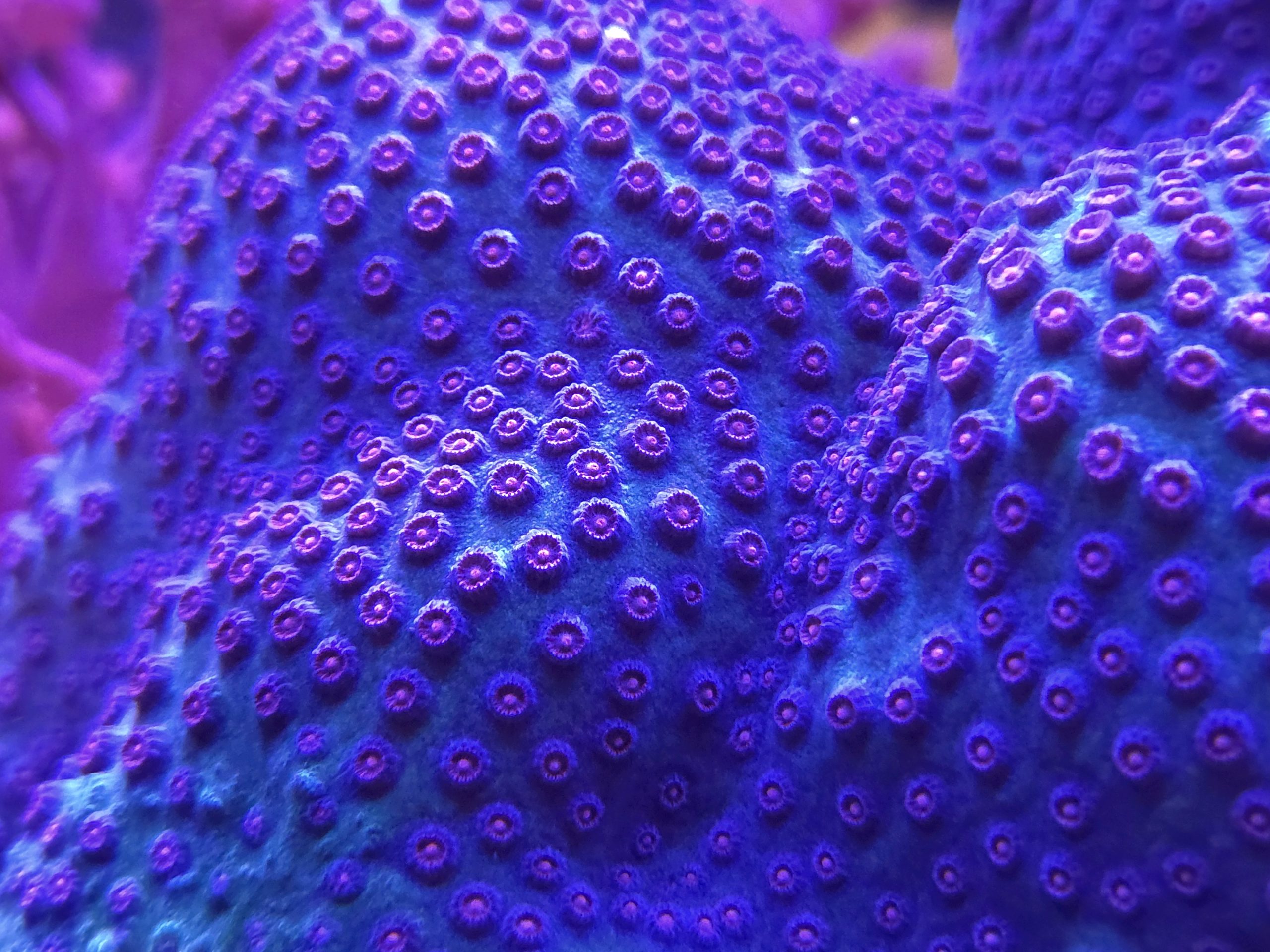
Meteor Shower Cyphastrea
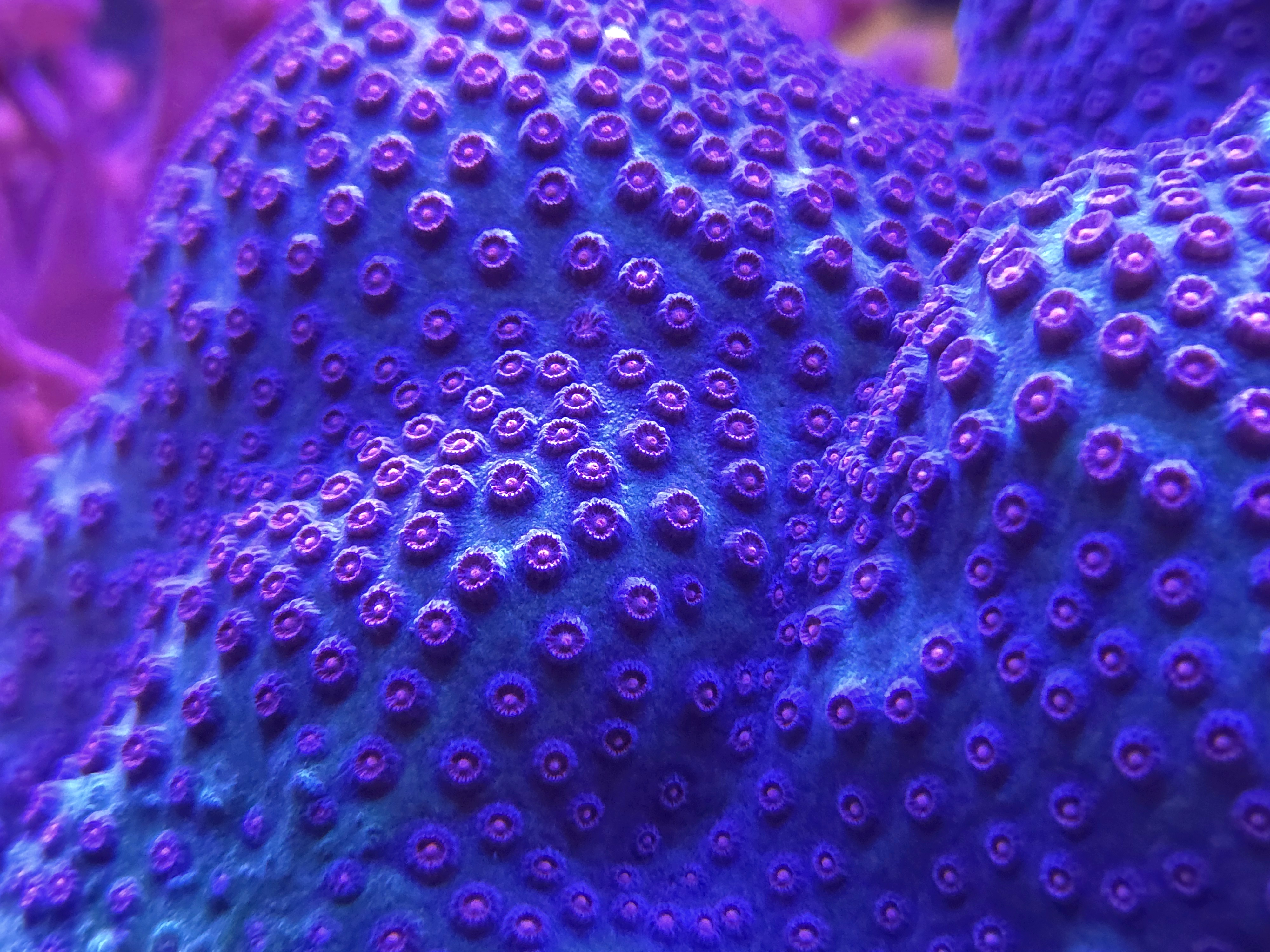
The Meteor Shower Cyphastrea is a stunning encrusting coral. Its bright blue base and orange polyps look like a starry sky. This coral is hardy, colorful, and perfect for many reef tanks.
Lighting, Flow, and Placement for Meteor Shower Cyphastrea
Meteor Shower Cyphastrea prefers low to moderate light. Aim for 50–100 PAR at the coral’s surface. Too much light causes the base to pale and the polyps to retract. Start it in a shaded area and move it slowly if needed.
Place this coral on rockwork, not on the sand. It encrusts surfaces and can spread quickly. Leave at least 2–3 inches of space from slower-growing corals. It is not very aggressive, but it can overgrow neighbors over time.
Provide moderate, indirect flow. The polyps should sway gently, not blast sideways. Strong direct flow can cause tissue recession on the edges. Low flow can allow detritus to collect and irritate the tissue.
- Target 50–100 PAR for best color and growth.
- Use indirect, moderate flow around the colony.
- Mount on isolated rocks to control spreading.
If the coral looks dull or closed, first check light and flow. Lower the intensity by 10–20% or move it to a shadier spot. Adjust flow so detritus does not settle on the surface.
Water Parameters, Feeding, and Troubleshooting
Stable water is more important than perfect numbers. Keep temperature between 24–26°C (75–79°F). Salinity should stay at 1.025–1.026 specific gravity. Avoid swings greater than 0.001 in a day.
Maintain alkalinity between 8–9.5 dKH. Keep calcium at 400–450 ppm and magnesium at 1250–1350 ppm. Nitrate should stay around 5–15 ppm. Phosphate between 0.03–0.08 ppm works well. Ultra-low nutrients can cause faded colors and slow growth.
- Test alkalinity 2–3 times per week in growing tanks.
- Use an auto top-off to prevent salinity swings.
- Perform 10–15% water changes every 2 weeks.
Meteor Shower Cyphastrea gains much from light, but feeding helps growth. Once or twice a week, broadcast feed small particle foods. Use reef roids, powdered coral foods, or finely minced frozen foods. Turn off return pumps for 15–20 minutes so food stays near the coral.
- Feed lightly to avoid nutrient spikes.
- Watch for polyp extension during evening hours.
- Clean detritus from around the base during maintenance.
Common problems include tissue recession from the edges, bleaching, and algae growth on dead spots. Recession often means unstable alkalinity or too much light. Bleaching usually follows rapid lighting changes. Algae on the skeleton means dead tissue from past stress. Correct parameters first, then gently brush algae away during water changes.
Add to Wishlist