Jokers Zoanthids
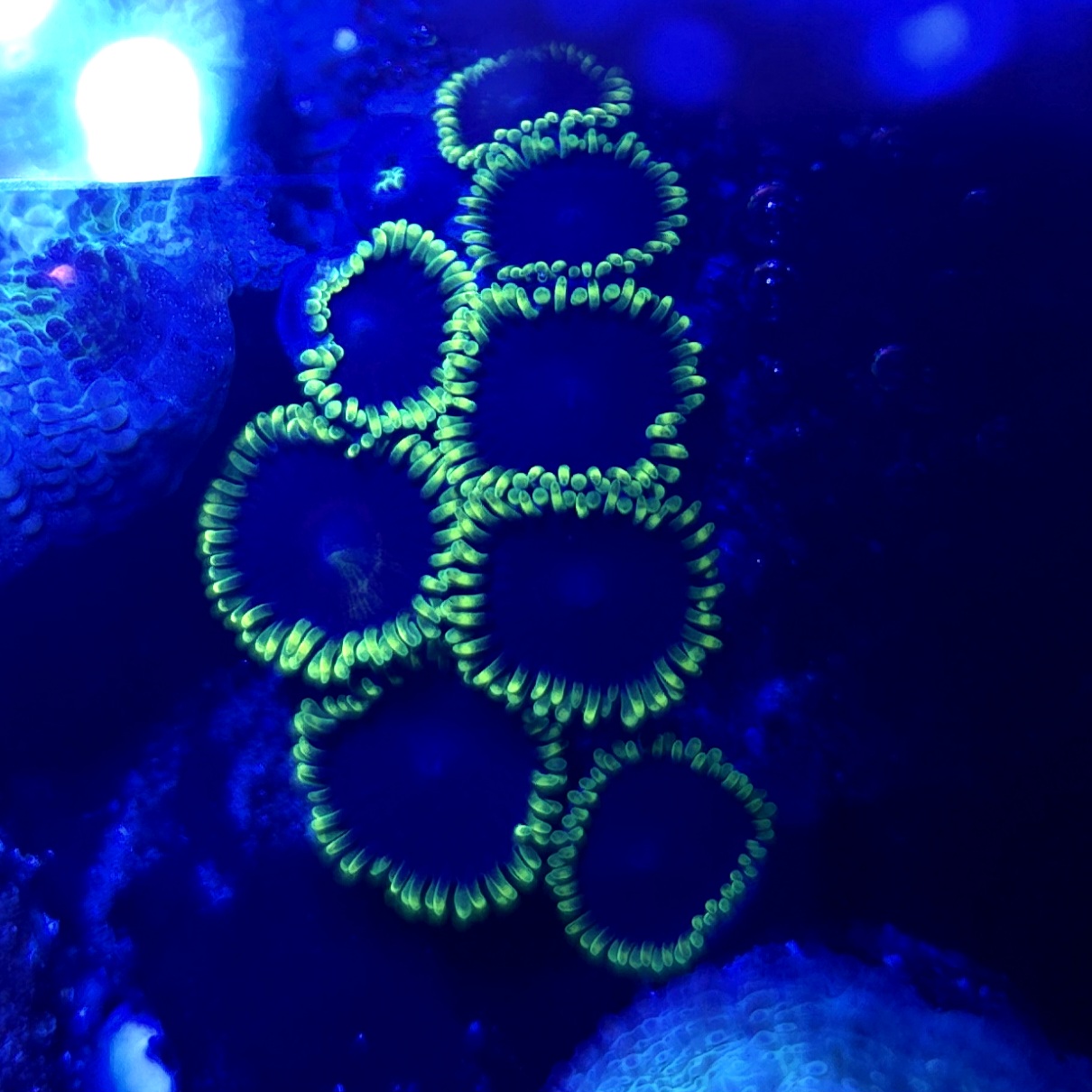
Jokers Zoanthids are bold, high-contrast polyps that stand out in any reef. Their bright centers and dark skirts make them a favorite starter zoa for many hobbyists. With the right care, they grow into dense, colorful colonies.
What Are Jokers Zoanthids and How to Place Them
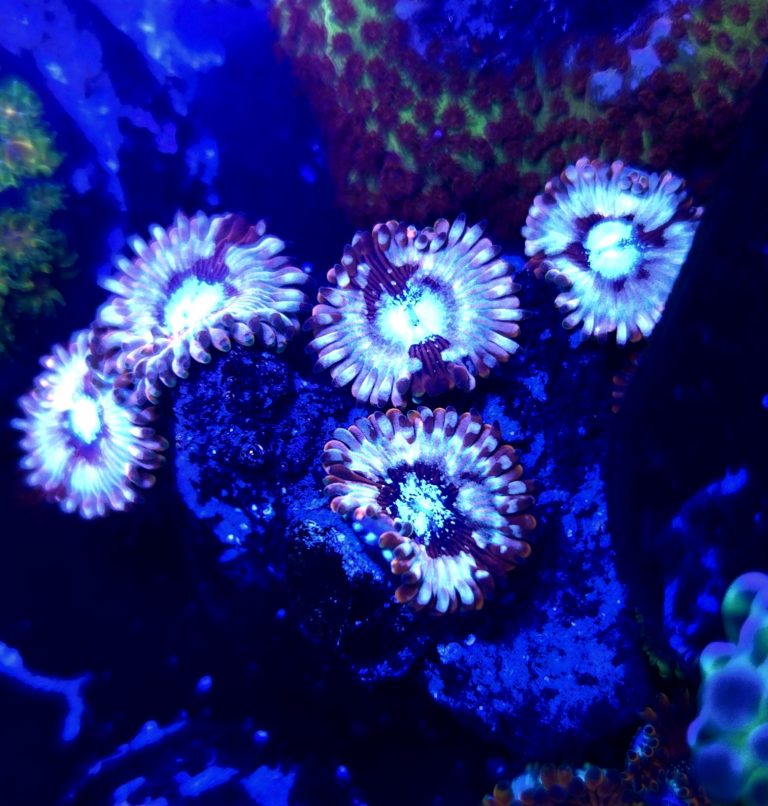
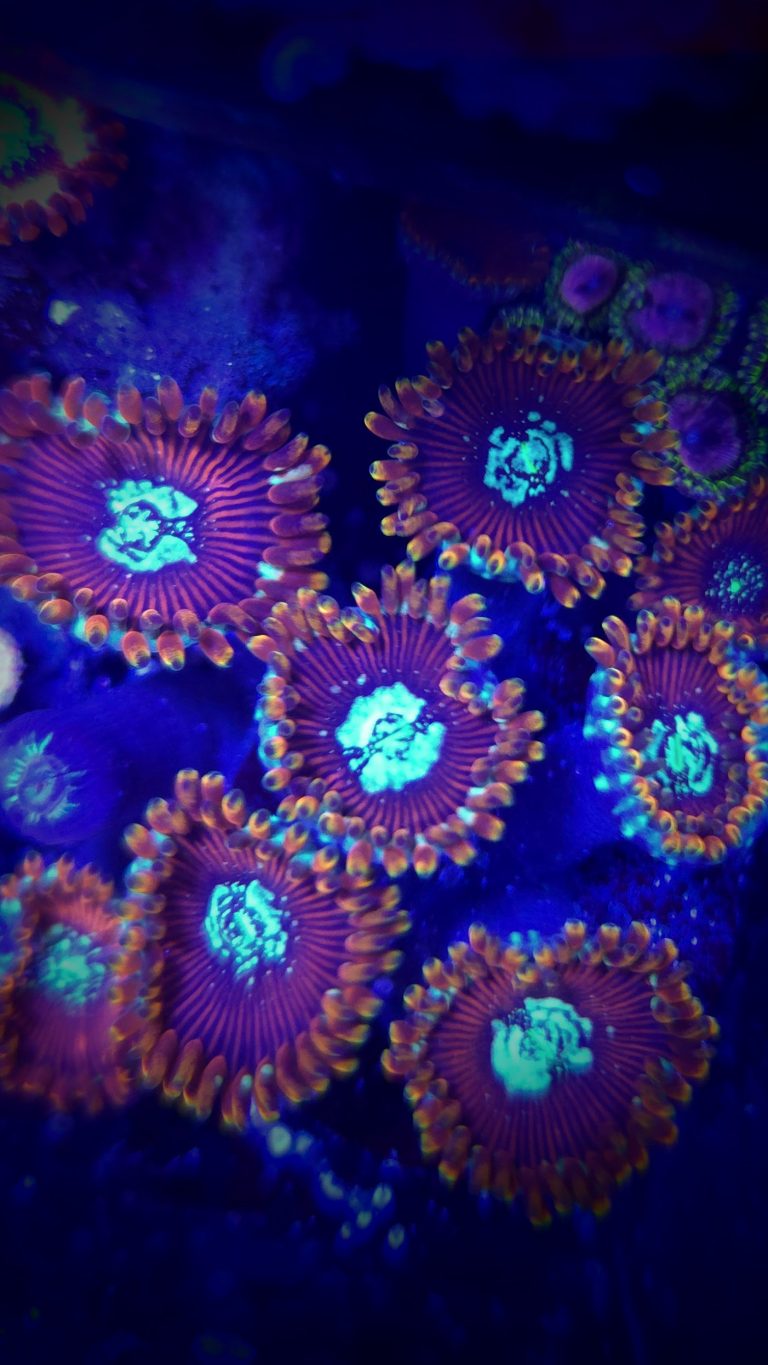
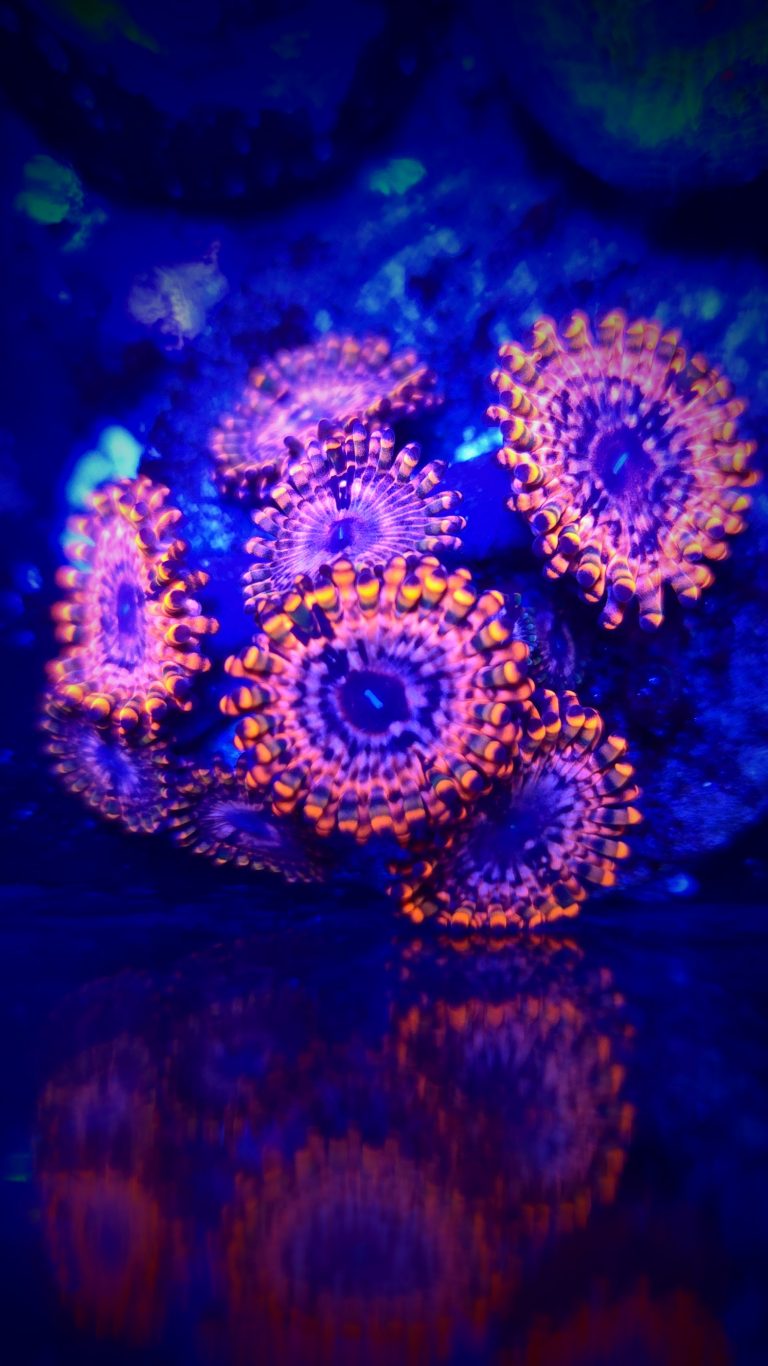
Jokers Zoanthids are a morph of Zoanthus polyps. They usually show a neon green or purple center with a dark outer ring. The skirt often has contrasting tips. This strong pattern makes them easy to spot from across the room.
Place Jokers in low to moderate light. Aim for 80–150 PAR. Too much light can cause the colors to fade or polyps to stay closed. Start them on the sand bed or lower rock. Then slowly move them up over two to three weeks if needed.
Flow should be gentle to moderate. The skirts should sway, not whip. Strong, direct flow can cause the polyps to close and stay small. Use a wavemaker on a random or pulse mode. Avoid pointing a powerhead straight at the colony.
Good starter parameters are:
- Temperature: 77–79°F (25–26°C)
- Salinity: 1.025–1.026 specific gravity
- Alkalinity: 8–9 dKH
- Calcium: 420–450 ppm
- Nitrate: 5–15 ppm, Phosphate: 0.03–0.1 ppm
Feeding, Growth, and Troubleshooting Jokers Zoanthids
Jokers Zoas get most of their energy from light, but feeding helps growth. Target feed once or twice per week. Use fine coral foods like reef roids or powdered plankton. Turn off flow, gently baste food over the polyps, then restore flow after 10–15 minutes.
Healthy Jokers will slowly spread over rock. Expect one to two new polyps per month under stable conditions. To encourage growth, keep nutrients non-zero and stable. Avoid aggressive nutrient stripping with heavy GFO or oversized skimmers.
- Glue frags to small ceramic plugs or rubble.
- Leave space between colonies to prevent crowding.
- Wear gloves and eye protection when handling zoas.
Common problems include closed polyps, shrinking skirts, or melting tissue. These usually link to swings in salinity, alkalinity, or temperature. Check parameters first when issues appear. Look closely for pests like nudibranchs, sundial snails, and zoa-eating spiders.
- Dip new Jokers in a coral dip for 5–10 minutes.
- Inspect at night with a flashlight for hidden pests.
- Remove algae or cyanobacteria growing between polyps.
If a colony starts to melt, frag healthy polyps away from the affected area. Place the new frag in stable, lower light and gentle flow. Many hobbyists save a morph this way. With patience and consistent care, Jokers Zoanthids can become a bright, reliable centerpiece in your reef.
Add to Wishlist