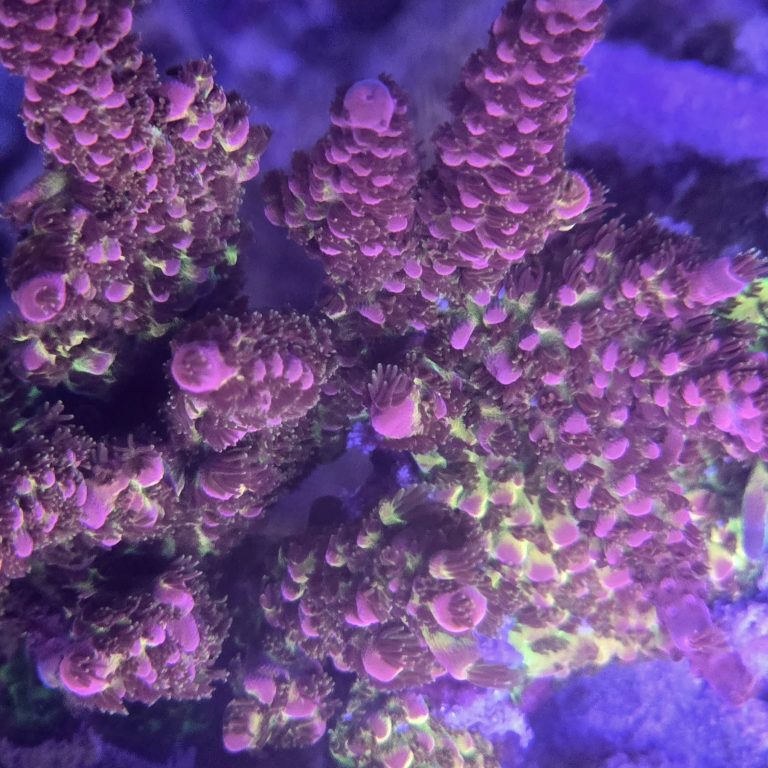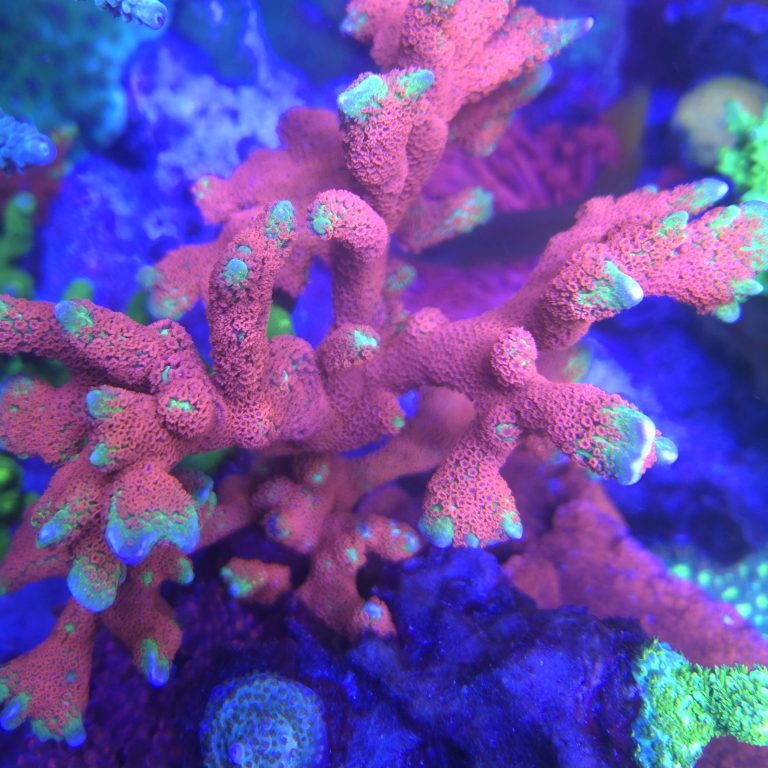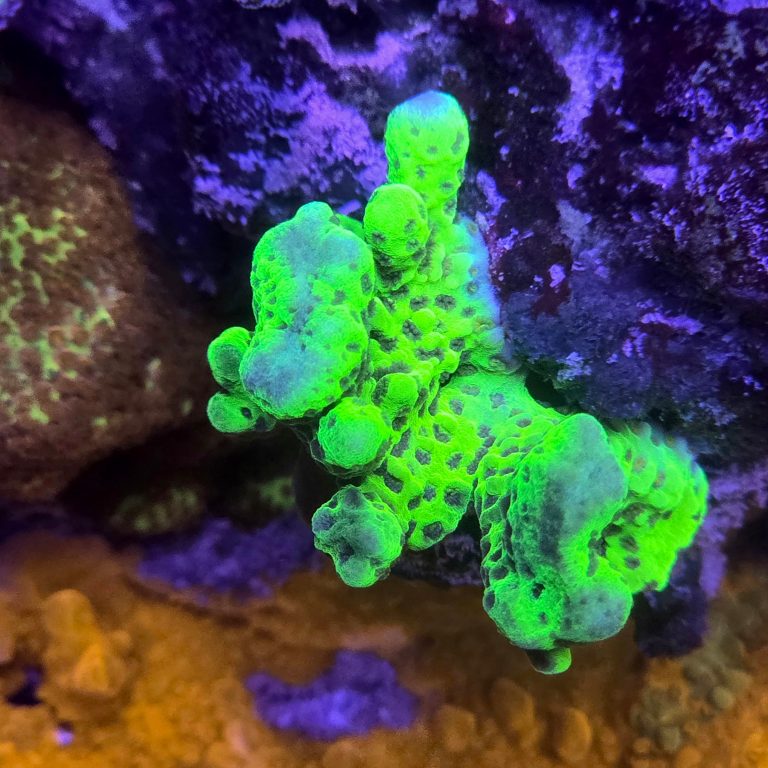
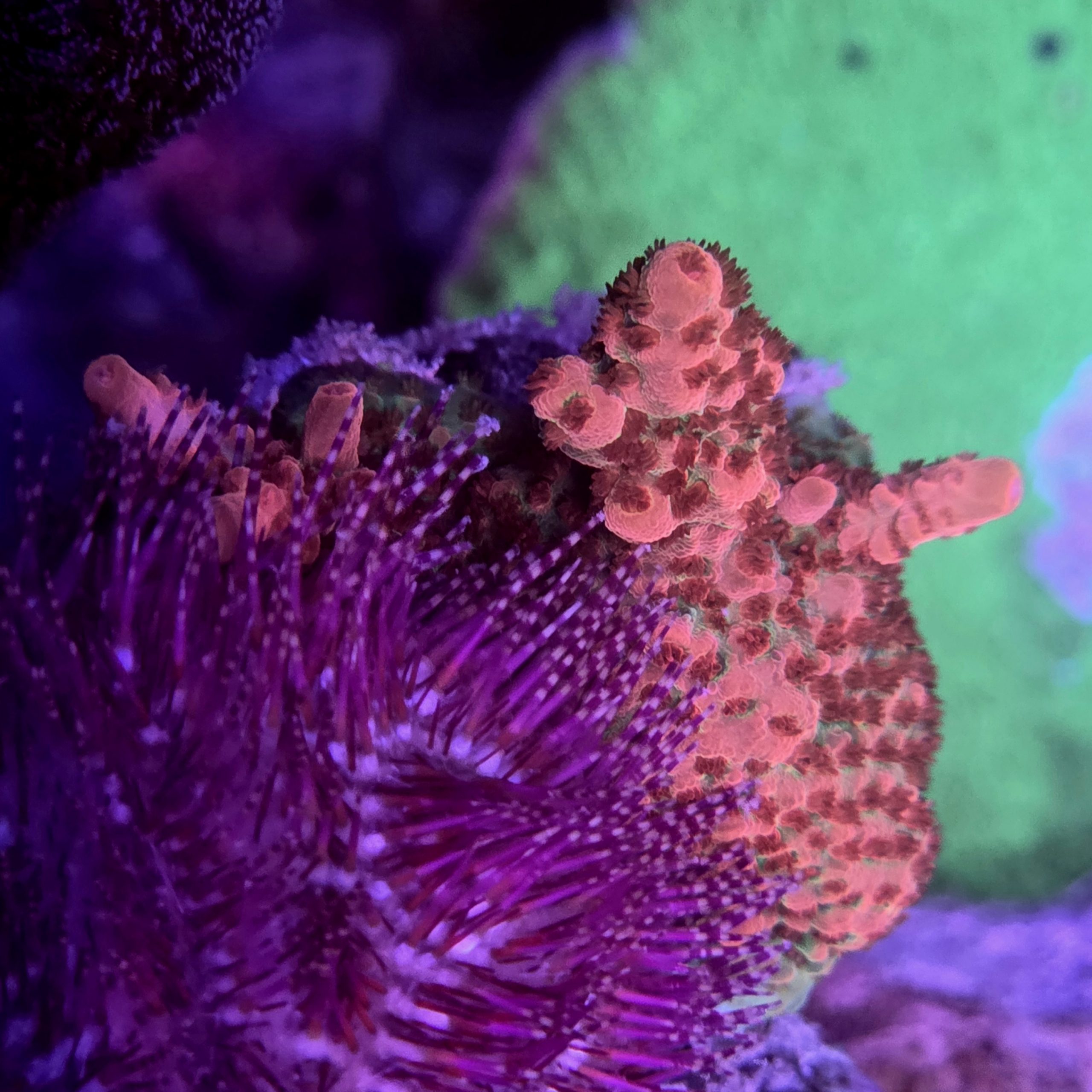
Cornbreds Maleficent Acropora
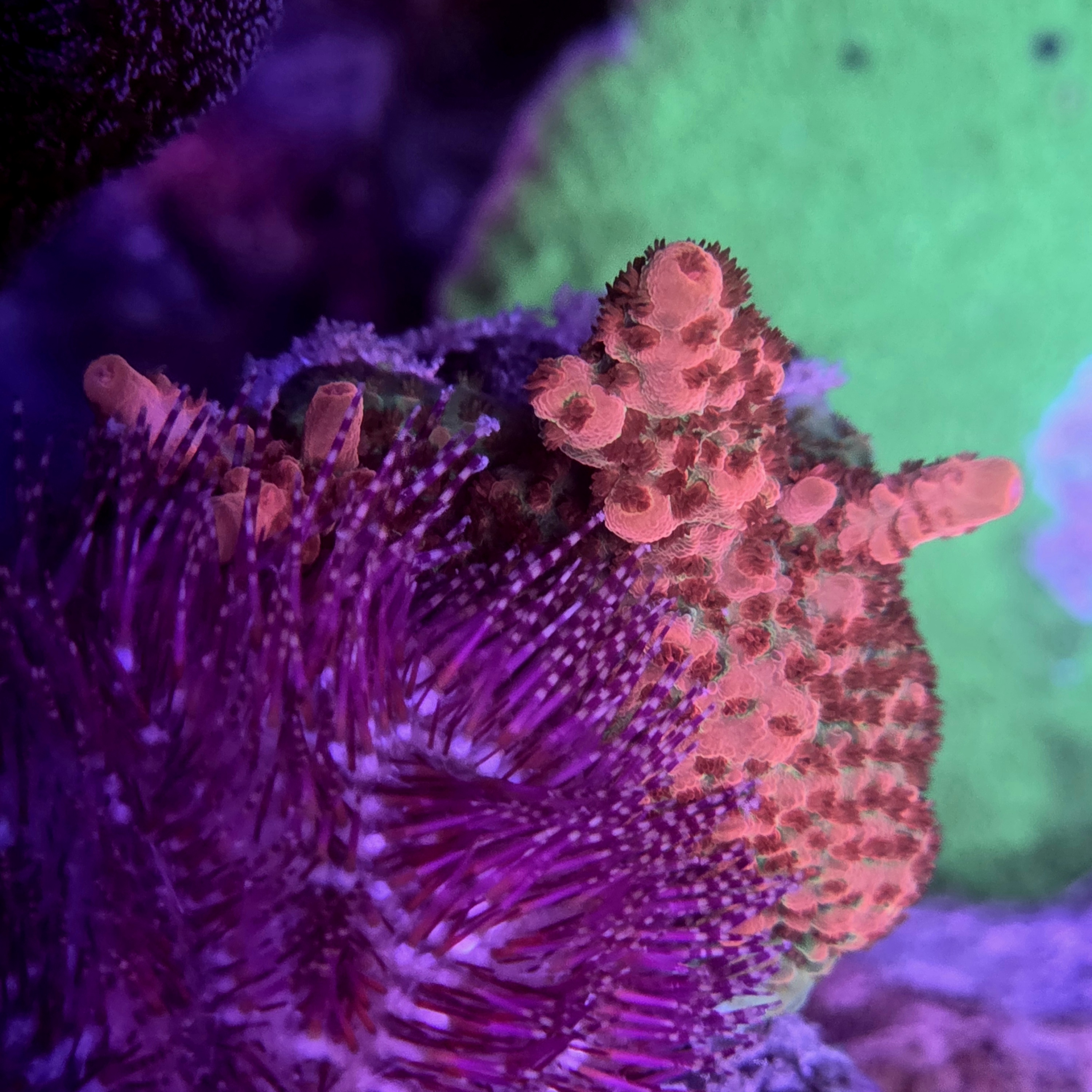
CB Maleficent Acropora is a striking, high-end SPS coral. Its deep purple branches and bright green polyps make it a showpiece. With the right care, it can grow into a dense, dramatic colony.
CB Maleficent Acropora Care and Placement
This Acropora prefers strong, stable conditions. Sudden swings in parameters quickly cause stress. Aim for 8–10 dKH alkalinity, 400–450 ppm calcium, and 1300–1400 ppm magnesium. Keep salinity steady at 1.025–1.026 and temperature at 77–79°F.
Lighting should be strong. Target 250–350 PAR at the coral’s location. Many reefers place CB Maleficent in the upper third of the tank. Start lower, around 150 PAR, then increase over 2–3 weeks. Watch for pale tips or tissue recession as signs of light stress.
Flow must be strong and random. Use alternating gyres or cross-flow patterns. The coral should sway but not whip violently. Avoid direct, laminar jets on the tips. Good flow helps remove waste and brings fresh nutrients to the polyps.
- Target 5–10% weekly water changes for stability.
- Test alkalinity at least 2–3 times per week.
- Use an auto top-off to prevent salinity swings.
Mount CB Maleficent on a stable rock or frag rack. Use reef-safe super glue gel or epoxy. Leave space around the frag so branches can grow without shading neighbors.
Feeding, Color, and Troubleshooting
CB Maleficent Acropora relies mainly on light, but feeding helps growth. Maintain low but not sterile nutrients. Keep nitrate around 5–15 ppm and phosphate at 0.03–0.08 ppm. Extremely low nutrients can cause pale, slow-growing colonies.
Feed small-particle foods 2–3 times per week. Options include reef roids, powdered SPS foods, and fine zooplankton. Turn off return pumps for 10–15 minutes. Let the food stay in the display where polyps can grab it.
- Do not chase ultra-low nutrients if color fades.
- Increase feeding slowly and watch for algae growth.
- Use a reliable skimmer to keep the water clear.
Common problems include tissue loss at the base, burnt tips, and browned-out color. Base recession often means unstable alkalinity or pests like Acropora-eating flatworms. Burnt tips usually follow rapid alkalinity spikes. Brown color often points to low light or high nutrients.
- Quarantine new frags for at least 4–6 weeks.
- Dip frags in an SPS-safe coral dip before adding to the display.
- Use a dosing pump for consistent calcium and alkalinity supply.
With stable parameters, strong light, and good flow, CB Maleficent Acropora rewards patience. Over several months, small frags develop thick, branching structures and intense contrast. The coral becomes a centerpiece that signals a mature, well-managed reef system.
Add to Wishlist