Blue Acropora Staghorn
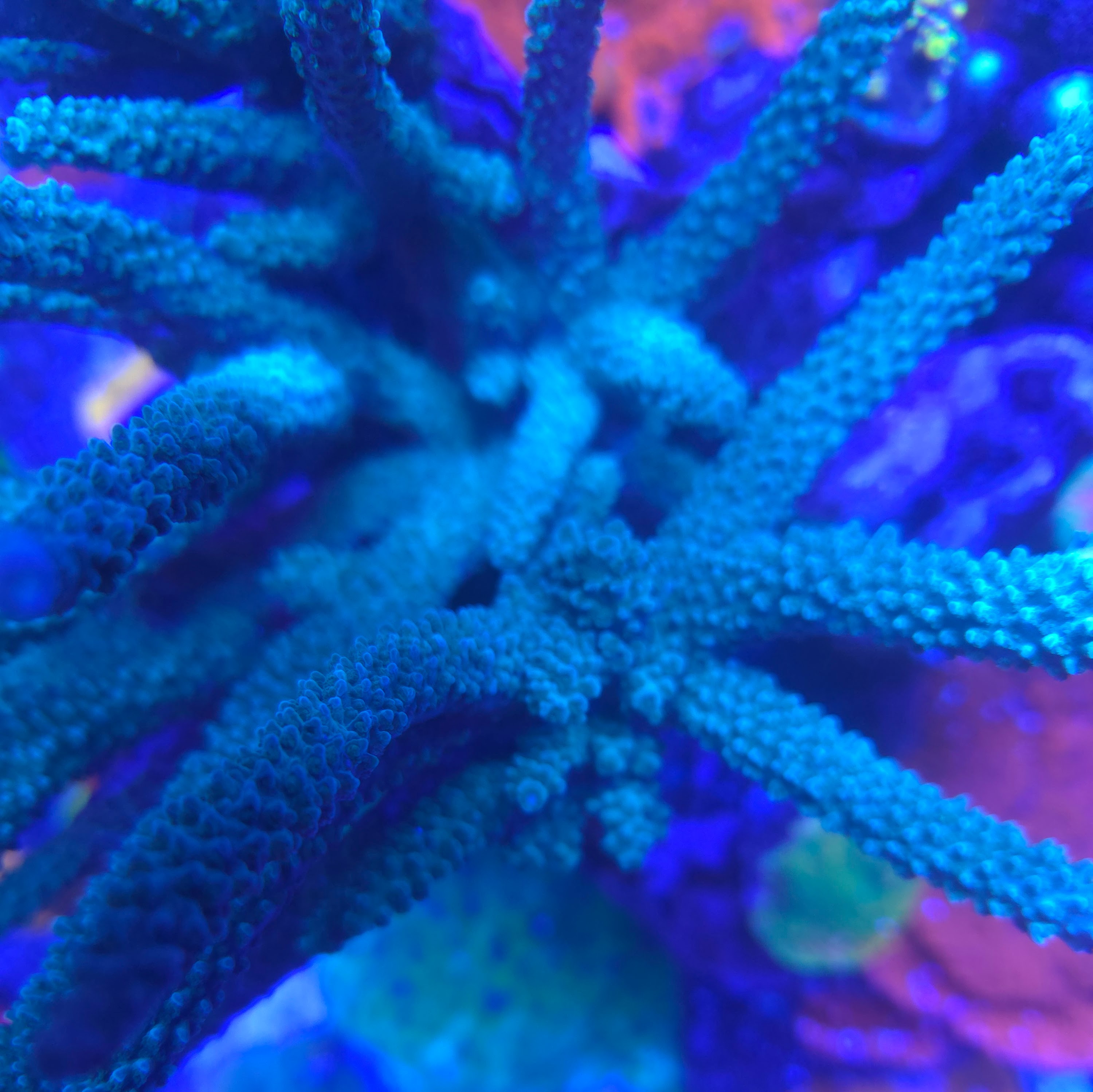
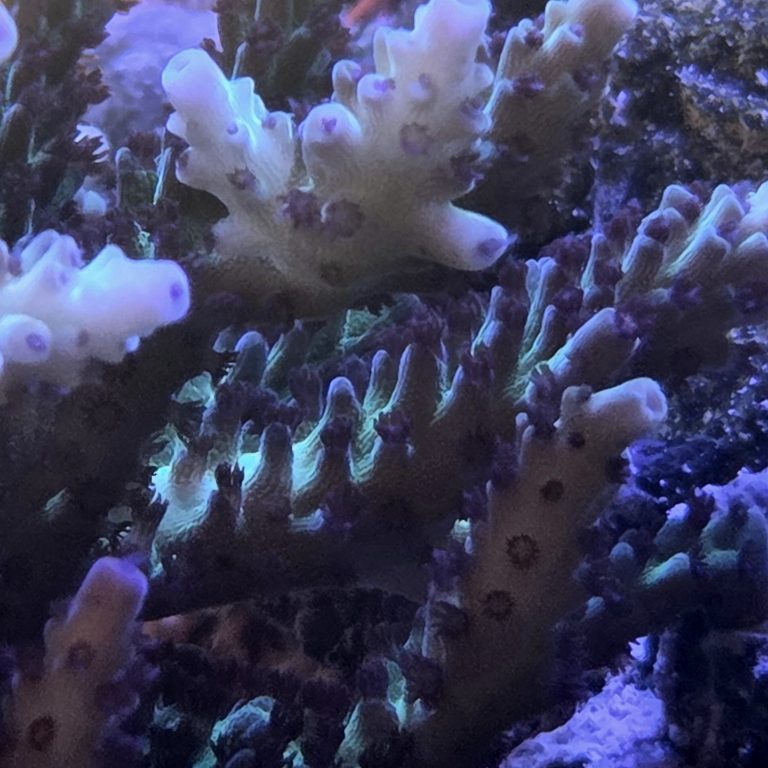
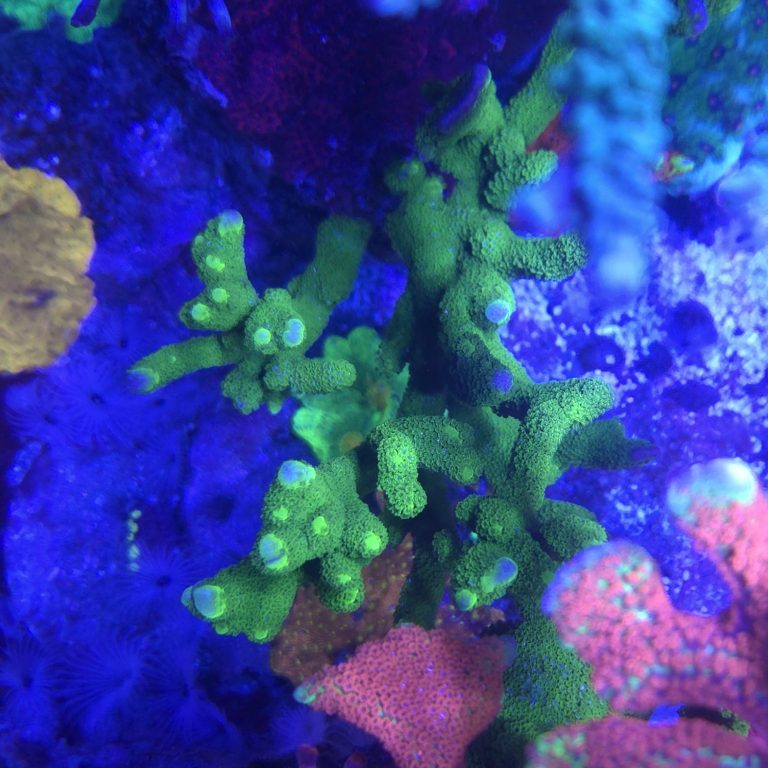
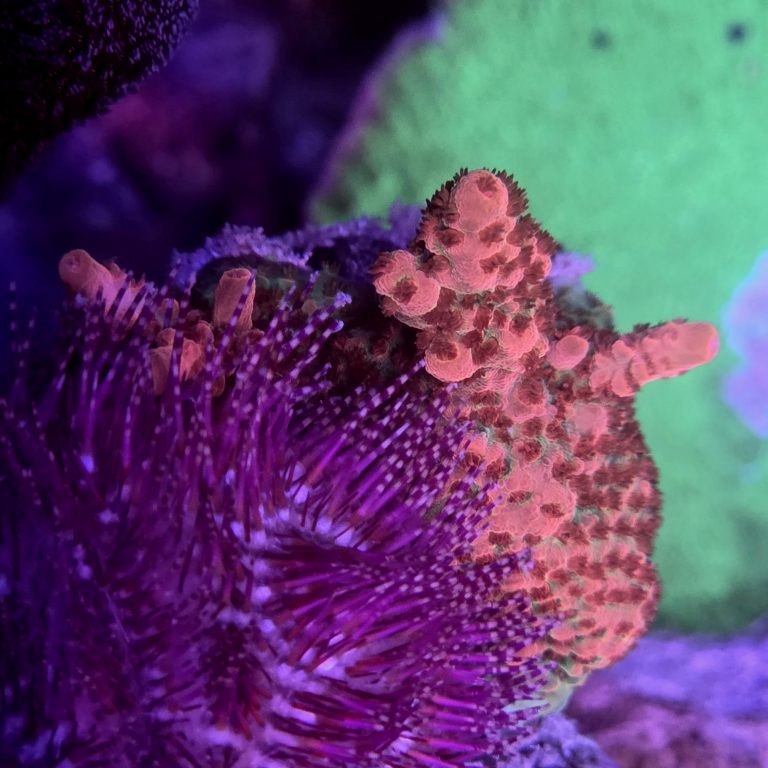
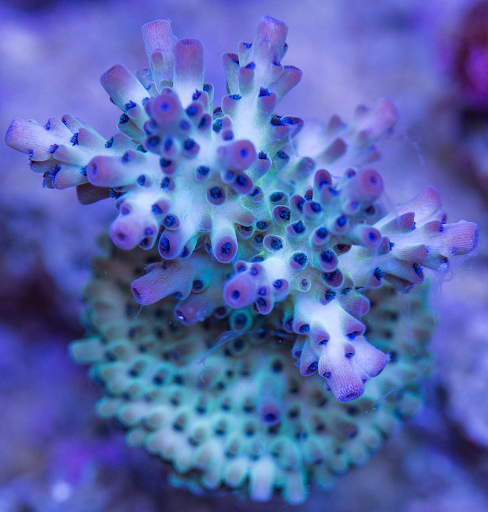
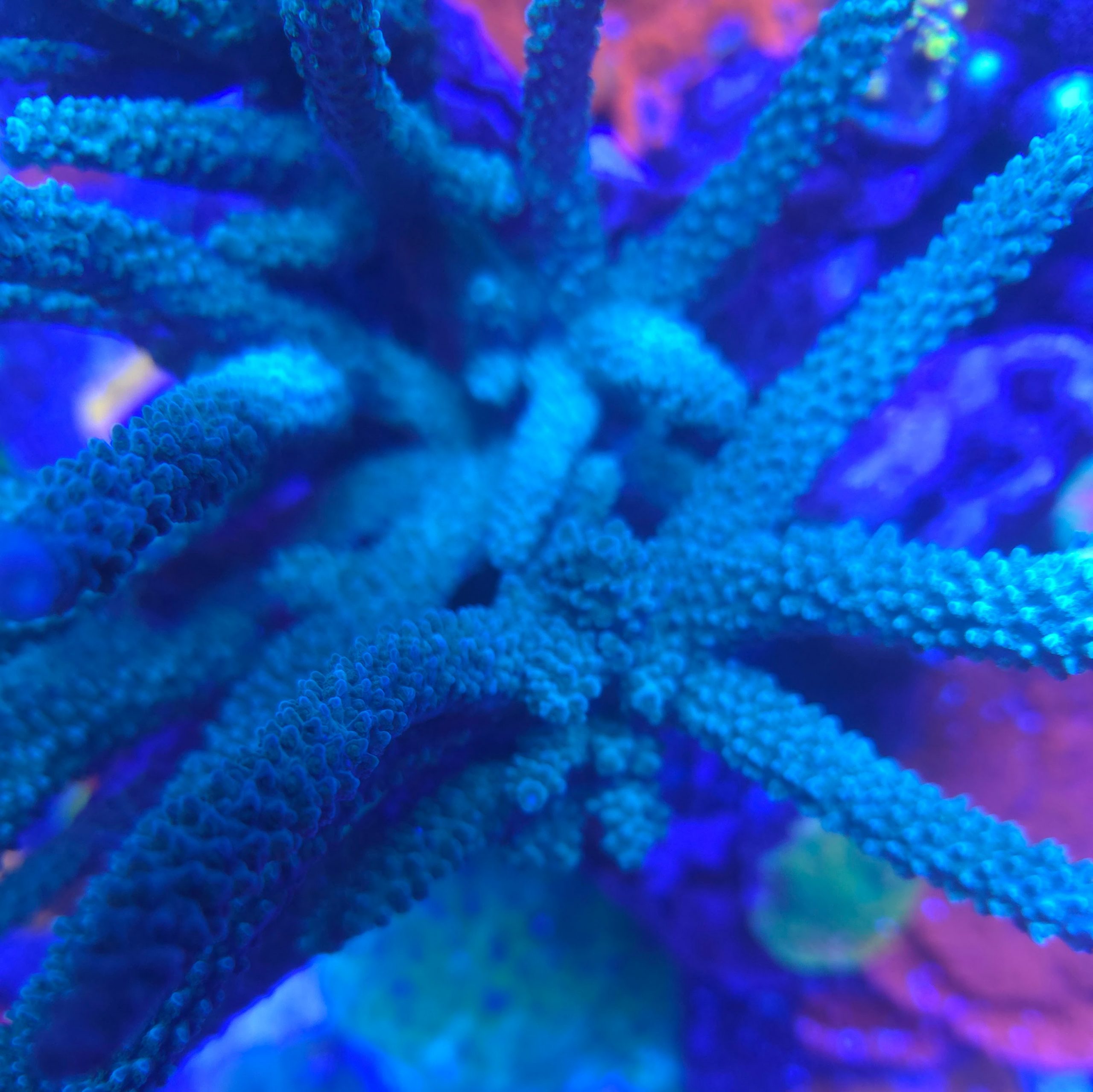
Blue Acropora staghorn corals are stunning centerpieces in SPS reefs. Their branching growth and electric blue tips draw attention fast. With the right care, they can grow into impressive colonies.
Understanding Blue Acropora Staghorn
Blue Acropora staghorn is an SPS coral that demands stability. It prefers strong light, high flow, and ultra-clean water. This coral is not ideal for beginners, but dedicated hobbyists can succeed.
Target PAR levels between 250 and 400 at the coral’s tips. Use quality LED, T5, or metal halide lighting. Place frags in the upper half of the tank. Acclimate slowly by starting them lower and raising the frag over 2 to 3 weeks.
Provide strong, random flow. Aim for 30–50 times tank turnover per hour. Use at least two wavemakers facing each other. Avoid direct laminar flow that blasts one side of the colony. The goal is to keep polyps gently moving and detritus suspended.
Maintain very stable parameters:
- Temperature: 24–26°C (75–79°F)
- Salinity: 1.025–1.026 specific gravity
- Alkalinity: 8–9 dKH, stable within 0.2 dKH daily
- Calcium: 420–450 ppm
- Magnesium: 1300–1400 ppm
- Nitrate: 2–10 ppm, not zero
- Phosphate: 0.02–0.08 ppm
Placement, Feeding, and Troubleshooting
Start new blue Acropora frags on a frag rack. Watch them for two weeks. Check for polyp extension, color, and any tissue loss. Once stable, glue the frag to rock with reef-safe epoxy and super glue gel.
Feed lightly but consistently. Blue Acropora rely mainly on light and dissolved nutrients. You can broadcast feed fine coral foods 1–2 times per week. Turn off return pumps for 10–15 minutes during feeding. Avoid heavy feeding that raises nitrate and phosphate too quickly.
- Test alkalinity at least 3–4 times per week.
- Use an auto top-off system to keep salinity stable.
- Consider dosing kalkwasser or two-part to support growth.
Watch for common problems. Faded color often means low nutrients or too much light. Brown, dull color usually points to high nutrients. Rapid tissue loss from the base can signal unstable alkalinity or pests.
- Dip all new Acropora frags to remove flatworms and red bugs.
- Inspect at night with a flashlight for bite marks or missing tissue.
- Keep a quarantine frag tank for new SPS when possible.
With patience, careful testing, and slow changes, blue Acropora staghorn can thrive. Over time, branches will thicken, color will deepen, and your reef will gain a striking blue focal point.
Add to Wishlist