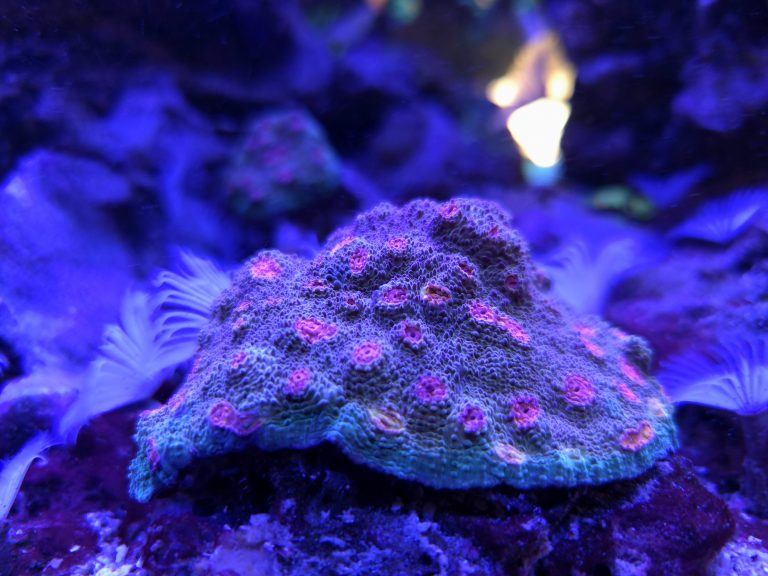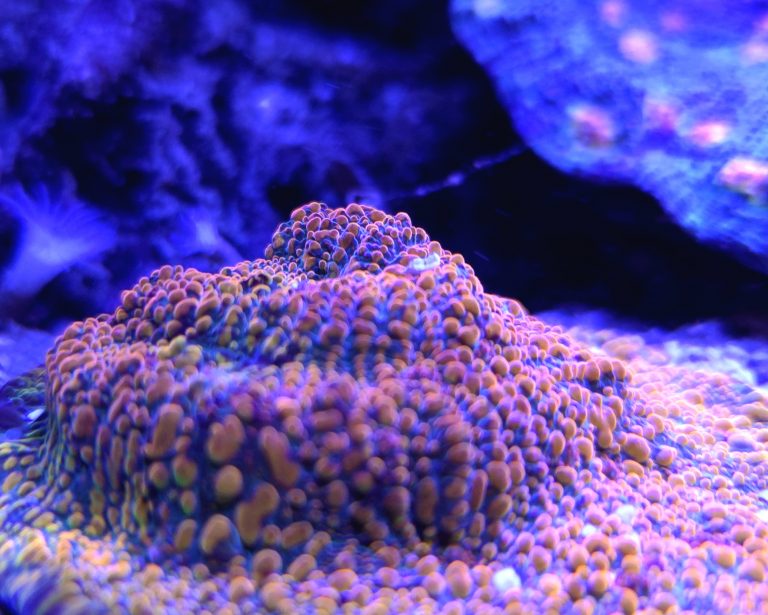
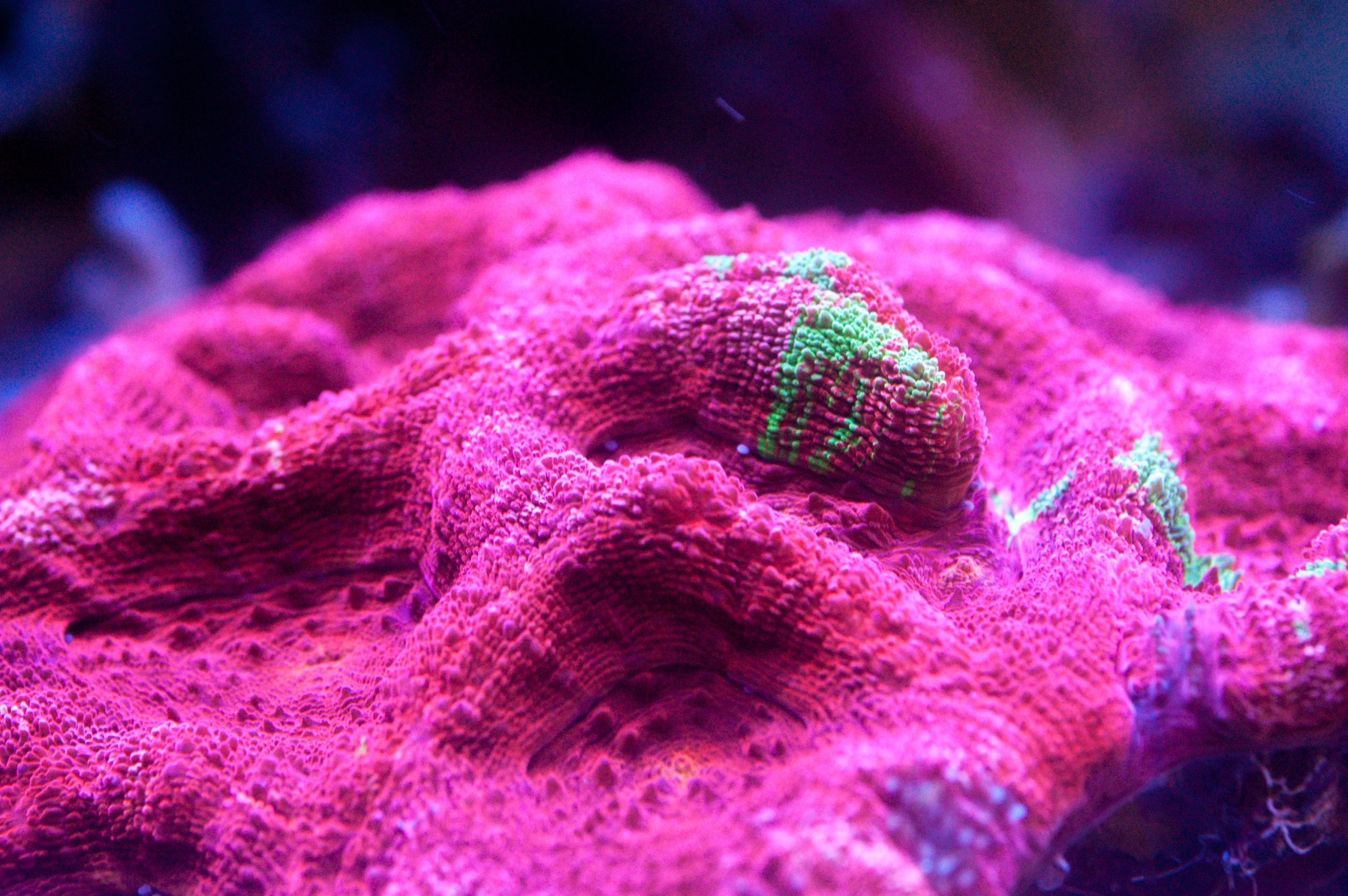
Bleeding Apple Bowerbanki
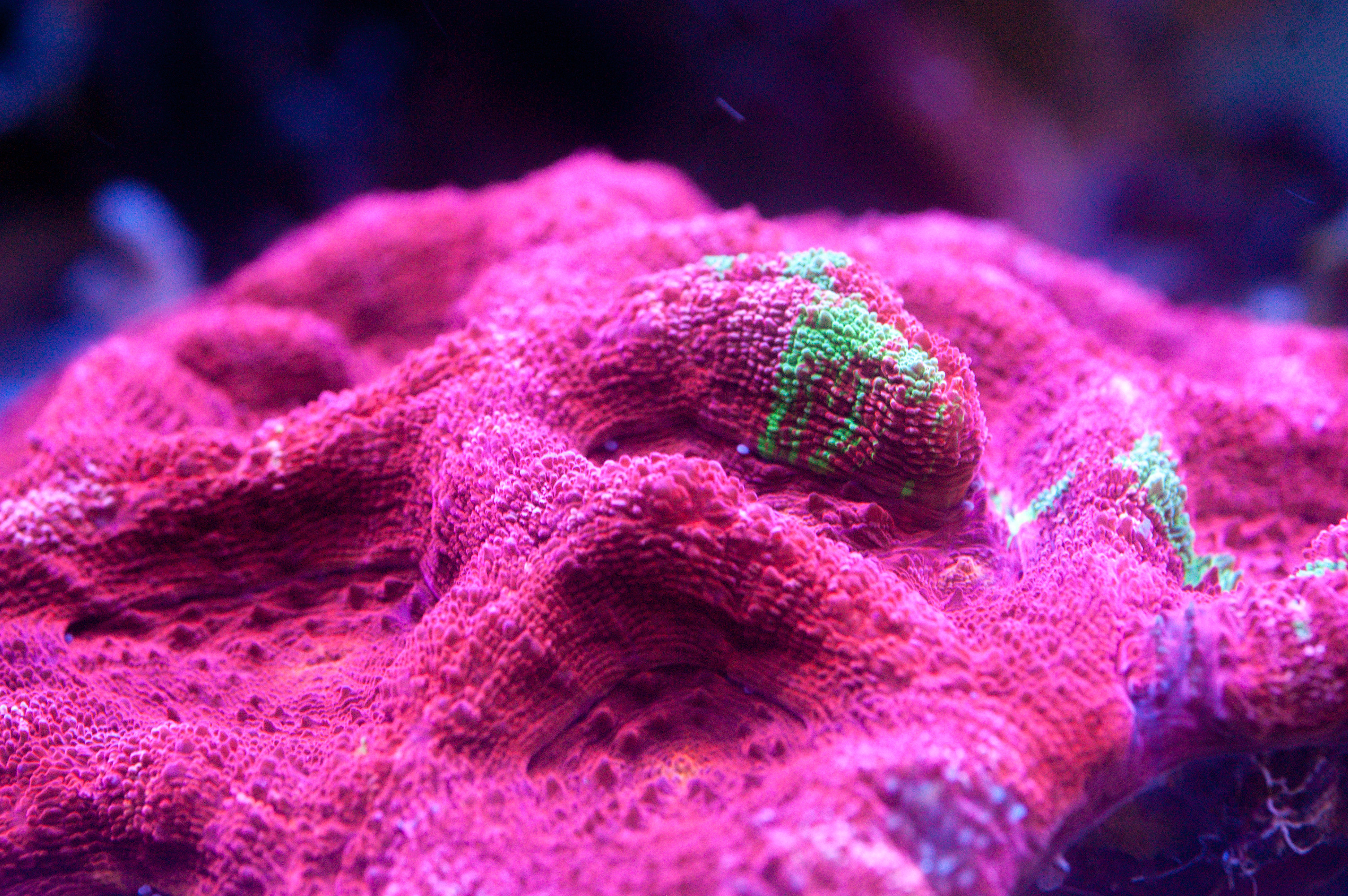
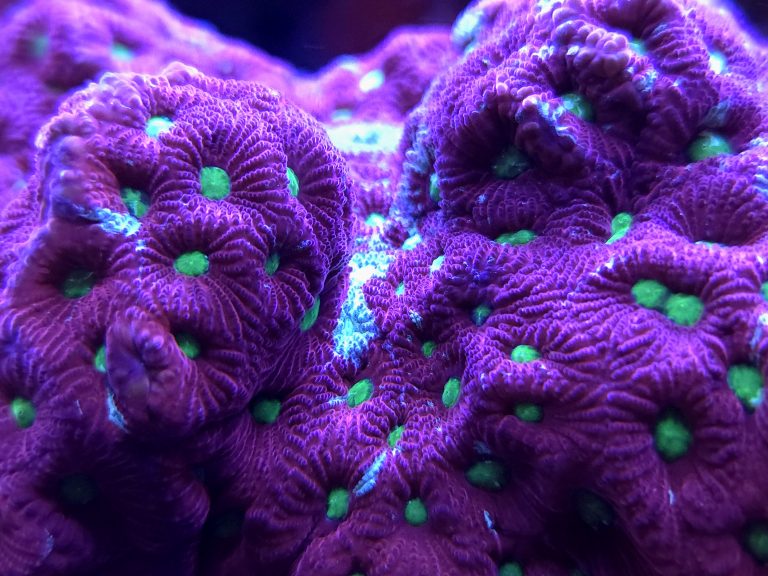
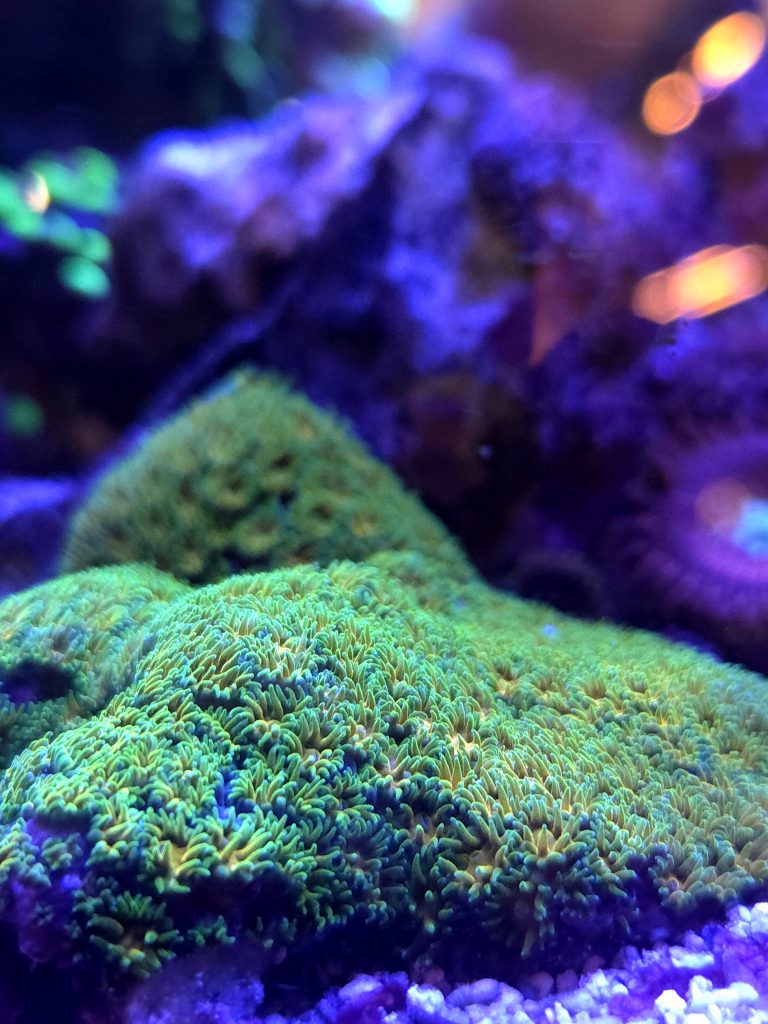
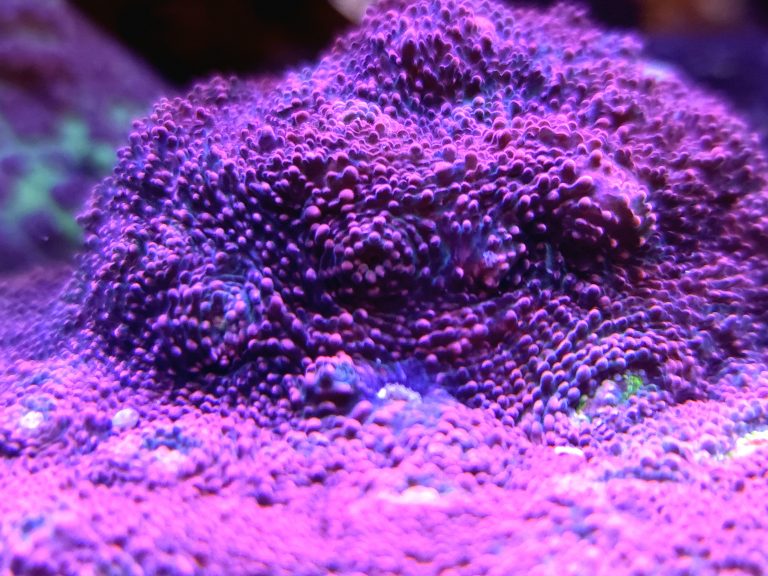
Bleeding Apple Bowerbanki corals are showpiece LPS for many reef tanks. Their deep reds, greens, and swirling patterns really stand out under blue lighting. With stable water and gentle care, they can thrive and grow into impressive colonies.
Bleeding Apple Bowerbanki Basics and Placement
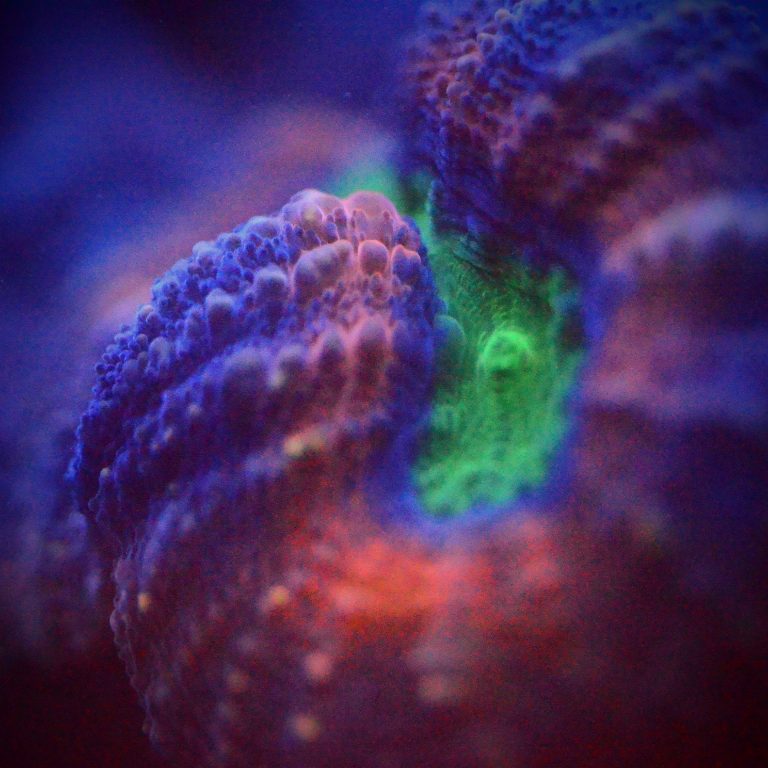
Bleeding Apple Bowerbanki is a type of encrusting LPS coral. It grows in thick, fleshy mounds with distinct ridges and valleys. The colors are most intense under strong blue spectrum LEDs. You will often see glowing red, orange, and green rings around each polyp.
These corals prefer moderate to low light. Aim for 80–150 PAR at the coral’s surface. Start them on the sand bed or a shaded rock ledge. Then slowly move them up if needed. Increase light over 2–3 weeks to avoid bleaching.
Flow should be gentle and indirect. Strong, direct flow can tear the tissue. It can also cause the flesh to recede from the skeleton. Place the coral where polyps gently sway, not whip around. Avoid pointing powerheads straight at the colony.
- Target 78–79°F temperature for best color and growth.
- Keep salinity stable at 1.025–1.026 specific gravity.
- Maintain alkalinity between 8–9 dKH with minimal daily swings.
- Hold calcium at 420–450 ppm and magnesium at 1300–1400 ppm.
Give your Bowerbanki space from aggressive neighbors. Avoid direct contact with torches, hammers, and galaxea. Their sweeper tentacles can sting and burn the tissue overnight.
Feeding, Growth, and Troubleshooting
Bleeding Apple Bowerbanki corals respond very well to feeding. They have large, fleshy polyps that grab food quickly. Feed 2–3 times per week for faster growth and richer color. Turn off flow during feeding to help capture food.
Use small meaty foods. Good options include mysis shrimp, finely chopped krill, and high-quality LPS pellets. Place food gently on each polyp with tongs or a turkey baster. Give the coral 10–15 minutes with pumps off. Then restart flow to prevent excess waste.
- Feed after lights have been on for 1–2 hours.
- Do not overfeed; watch for uneaten food around the base.
- Test nutrients weekly when increasing feeding.
- Aim for nitrate 5–15 ppm and phosphate 0.03–0.1 ppm.
Color fading often means too much light or too little nutrient. If colors wash out, lower PAR by 20–30% and reduce white channels. If tissue recedes from the edges, test alkalinity first. Rapid swings in alk are a common cause of recession.
Brown jelly or rapid tissue loss needs quick action. Siphon off affected tissue and perform a 10–20% water change. Consider an iodine or coral dip following manufacturer directions. Improve flow around, but not directly on, the coral to reduce detritus buildup.
- Quarantine new LPS corals for at least 2 weeks when possible.
- Inspect often for vermetid snails and pest worms near the base.
- Use a coral stand or frag rack to keep the base clean.
- Log changes in light, dosing, and feeding to track results.
With stable parameters, gentle light, and regular feeding, a Bleeding Apple Bowerbanki can become a signature coral in your reef. Growth may seem slow at first. Once settled, you will see new ridges and brighter rings forming around each polyp, rewarding your patience and care.
Add to Wishlist